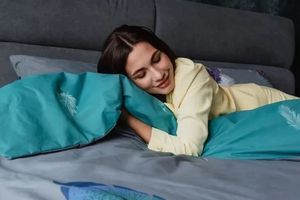

To understand the difference between a mattress protector, a fitted sheet and a mattress cover, look at what each one is for: a mattress protector guards against moisture, stains and wear, a full cover completely seals the mattress off from allergens and dust, and a fitted sheet is part of the bedding that you actually sleep on. Your choice depends on whether you want to protect the bed from accidentally spilled coffee or are simply looking for a sheet that does not crumple under your back.
The thin cotton fabric of a bedding set lets up to 100% of liquid and dust through in a few seconds. If you spill tea on the bed, an unprotected orthopaedic mattress costing from 15,000 UAH will be ruined. Understanding how these products differ is the only reliable way to keep your bedroom clean.
How a Mattress Protector Differs from a Fitted Sheet and a Cover: Definitions
A mattress protector is a dense multi-layer protective accessory with a waterproof membrane or silicone filling at a density of 150–250 g/m², fitted over the mattress to protect it from moisture and dirt.
A mattress cover is a zipped protective textile product that encloses the mattress on all six sides and acts as a barrier against dust mites and allergens.
A fitted sheet is a classic piece of bedding made of thin fabric (cotton, jersey) with an elastic band to hold it on the bed, and it needs washing after every week of use.
Comparison Table: What Protects the Bed from What
Each textile item has its own physical parameters, density in g/m², composition and care rules.
We have put the key technical data into one table:
| Comparison parameter | Mattress protector | Full mattress cover | Fitted sheet |
|---|---|---|---|
| Material density | 160–250 g/m² (multi-layer) | 140–200 g/m² (single layer) | 110–135 g/m² (thin bedding) |
| Water protection | 100% (in Aquastop models) | Low (only stops dust) | None (soaks through instantly) |
| Dust mite protection | High (covers the top and sides) | Maximum (sealed barrier) | Weak (lets skin flakes through) |
| Washing frequency | Gently at 30–40 °C once a season | At 40 °C, 1–2 times a year | At 40–60 °C, every 7–10 days |
| Main function | Extending the life of the bed | Complete isolation from allergens | Body comfort during sleep |
Honest Downsides of Each Accessory
Buyers most often compare a mattress protector with a fitted sheet, as both compete for the place directly under your body. Here is how these two popular formats compare:
- Mattress protector: Its main drawback is that Aquastop models with a budget membrane may rustle slightly when you move, which disturbs very light sleepers. You also need to buy a separate bedding set to go on top.
- Fitted sheet: Its honest drawback is that it offers no protection against liquids and stains. If you spill water, the fabric soaks through instantly and all the moisture goes into the deep layers of the orthopaedic foam. It also wears out much faster because of frequent washing.
The verdict: who should choose what: A mattress protector is a must for owners of new, expensive mattresses and families with small children and pets. It takes every hit, from coffee to children's accidents. A fitted sheet suits absolutely everyone as the top hygienic layer of bedding: it makes the bedroom look attractive and is easy to wash.
How to Choose and Make Up Your Bed: A Step-by-Step Guide
Choosing bedding and layering it correctly on the bed requires precise steps. Follow this numbered plan:
- Measure the bed with a tape measure: Note the exact length and width of the mattress (for example, 160 × 200 cm) and be sure to record its depth (usually 18 to 25 cm).
- Put the full cover on the mattress: This comes first. The mattress is fully zipped in to seal it from dust. This step is only done 1–2 times a year.
- Fit the mattress protector on top: Pull the elasticated skirt over the mattress or secure the four corner straps. Make sure the fabric lies perfectly flat, with no creases or folds.
- Put on the fitted sheet last: Stretch the coloured or white fitted sheet from your bedding set over the protective layer.
Frequently Asked Questions About the Differences Between Bedding Items (FAQ)
Can I sleep directly on a mattress protector without a sheet?
No. A mattress protector has a protective function and a fairly dense structure. Washing it every week is inconvenient because it takes a long time to dry. A fitted sheet is an essential soft, hygienic barrier that is easy to remove and wash.
Why does a new mattress warranty become void if you don't buy a protective cover?
Any visible stain, liquid mark or biological trace on the upholstery of an orthopaedic mattress is grounds for refusing warranty service. A dirty mattress will not be accepted for inspection for hygiene reasons.
How can I tell if a fitted sheet is the wrong size?
If the corners of the bed start curling up after you make it and the fabric is stretched too tightly, the sheet is too small. If folds form on the surface and the sides hang loosely and slip, you have bought a sheet that is larger than your mattress.
Does an ordinary quilted mattress protector protect the bed from a big spill?
No, a classic quilted cotton model only stops small drops of water or sweat thanks to its inner filling. Full 100% protection against spilled tea or coffee is only guaranteed by models with an Aquastop polyurethane membrane.